
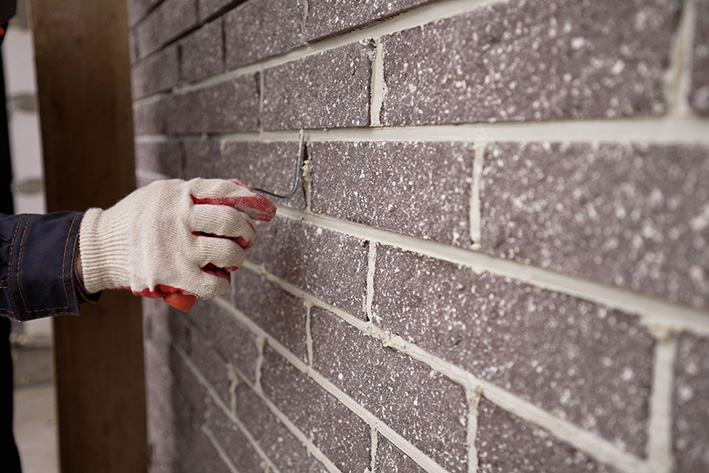
For most homeowners, investing in brick probably feels like the most durable solution when compared to other home materials. For the most part, brick can withstand the changing seasons on the exterior, providing more indoor warmth in winter and keeping the home cool indoors in summer.
While brick may be durable, the mortar joints between them aren’t as long-lasting. As the mortar starts to crack, crumble, and recede, this could jeopardize your bricks, leading to a phenomenon known as brick rot.
To save your mortar and your entire brick home, tuckpointing may be necessary.
Keep reading to learn more about brick rot and how tuckpointing can protect your home against it.
What is Brick Rot?
Brick rot is the progressive structural failure of brick caused by constant water exposure and the freeze-thaw cycle. While brick may appear to be completely solid, it is actually a very porous material that absorbs moisture and releases it back into the air.
The mortar between bricks is much softer than the bricks, which helps the structure absorb movement without easily cracking or collapsing. When the mortar between the bricks is compromised, it allows moisture to get trapped in the bricks, intensifying the freezing and expansion process until the bricks start to crack and shatter in a process known as spalling.
Typically, the outer portion of the brick is compromised first, followed by the core. Once the “rot” spreads to the core of the brick, it puts the entire structure at risk.
What is Tuckpointing?
Once the mortar begins to deteriorate, the damage to the brick can start to compromise your home. Tuckpointing is a way to repair mortar joints between bricks before moisture seeps in and starts to destroy the bricks and jeopardize the structure. This process involves three key techniques for replacing the mortar, thereby preserving the surrounding brick structure.
Routing – carefully grinding or raking out the current damaged mortar to a uniform depth
Filling – replacing the void with high-quality mortar matching the composition of the original material
Filleting – finishing it off with a ‘tuck’ formed by cutting a narrow contrasting line down the center using a distinct color of mortar or lime putty.
Why Tuckpointing is Essential
The seemingly simple technique of tuckpointing is very critical to keeping your bricks durable. Here is why getting this done at the first sign of trouble is critical.
It Minimizes Excess Moisture
While bricks can absorb and release moisture on their own, too much moisture trapped within them, especially during the freeze-thaw cycle, can be destructive. Mortar helps protect the brick by preventing excess moisture from entering the brick’s interior, where severe damage can occur. Tuckpointing replaces missing mortar, helping to continue protecting the brick from moisture damage.
It Minimizes Secondary Damages
Besides damage to the brick itself, water trapped within the brick due to missing mortar can also compromise the home’s frame, causing wood rot and damaging the drywall indoors. This trapped moisture could also cause mold to develop within the walls of your home.
It Minimizes Excessive Home Repair Costs
Allowing moisture into your home can lead to a host of financial problems, including structural damage, mold damage, and pests. All of this could cost tens of thousands of dollars to address. A small investment in tuckpointing can save you plenty of money from unforeseen repair costs.
Protect Your Brickwork with Expert Masonry Services
Brick rot is an ongoing phenomenon. Therefore, your best protection is to have a brick mason inspect your bricks professionally every 3 to 5 years. You can perform a simple DIY inspection annually to alert you to anything wrong. Using a screwdriver, if you scrape the mortar and it falls away like sand, there is likely a problem requiring tuckpointing. Likewise, if you see powdery residue forming on your bricks, it is efflorescence, a sign that excess moisture is getting into them.
Don’t let damaged brickwork compromise your home, building, or structure. Contact Primo Contracting in Rochester Hills today. With more than two decades of experience as general contractors specializing in masonry construction and repair, we provide trusted tuckpointing services that help protect and restore your brickwork. Schedule a free estimate today.