
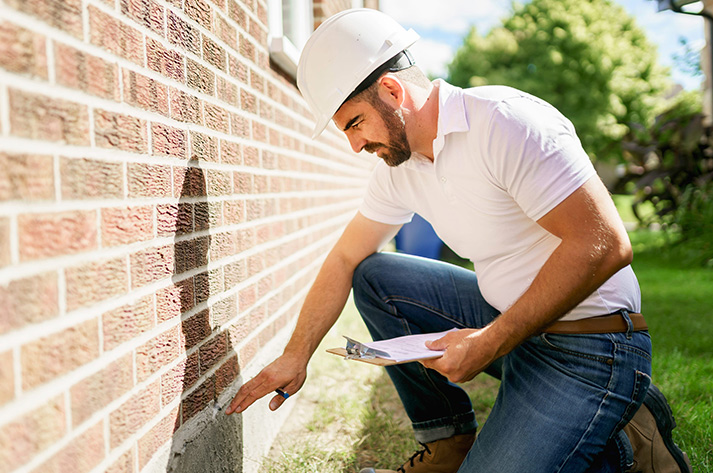
A few broken bricks can cause an entire wall to appear in disarray. The issue then becomes whether or not those bricks need replacing or if the damage suggests a more serious problem. Before coming to a decision, a contractor examines things beyond the obvious: is the wall still stable? Where is the water entering? Are the cracks worsening? And just how much of the masonry is affected?
The solution could range from a minor masonry repair to a full rebuild;
in some cases, the best course of action is to dismantle and reconstruct one of the damaged parts while leaving the rest of the structure unchanged.
Should You Repair Brick or Rebuild It?
If the damage is limited and the rest of the structure is in good condition, then carry out the repair; however, if the bricks are shifting, the wall is leaning or bulging, or the damage is widespread, then making individual repairs is unlikely to last, and reconstruction of the section should be considered.
Before coming to a decision, it’s recommended to carry out an inspection first to figure out the best course of action.
What is the First Thing a Contractor Looks For?
The contractor begins by examining the brickwork as a whole. The way a brick is cracked near a downspout is quite different from a stair-step crack that goes across a wall. They look at both the pattern and position of the damage and then check for any signs that the masonry has shifted.
That inspection may include:
• What is the condition of the bricks? Are only a few of them chipped, or are many of them crumbling, flaking, or loose?
• Is the mortar showing wear only in certain areas, or is it deteriorating all over the wall?
• What does the wall look like? Does it appear to be straight, or is some section of it leaning or bulging?
• Regarding moisture: are there any leaks, damp spots, drainage issues, or damaged gutters in the vicinity?
• Is there a visible issue at the base of the structure or in the vicinity of an opening?
The contractor should also know the type of wall they are looking at since brick veneer and a solid masonry wall can act in different ways and therefore may require different kinds of repair.
When Brick Repair Makes Sense
Where the wall is stable and the damage is limited to a small area, a targeted repair will be sufficient. The mason could replace the damaged bricks, repair just that section, or repoint the mortar joints. Repointing involves removing the mortar that has deteriorated and then fitting in new mortar which matches the existing brickwork.
The choice of materials is also important, particularly when dealing with older brick; if the mortar used is too hard for the masonry around it, this can lead to additional damage. Any effective repair should match the existing wall, both in terms of its performance and in appearance.
When Rebuilding Is the Better Call
A rebuild becomes more likely if the damaged masonry can no longer be trusted to remain in place, and in such cases worth investigating are a wall that is noticeably leaning, a section that is bulging, or bricks that have come away from the adjacent masonry. Similarly, damage that has spread over a significant part of a chimney, a wall, or some other brick structure should also be looked at closely.
It doesn’t have to involve beginning the whole structure again. A contractor might suggest carefully taking down and reconstructing just one section, on the condition that the rest of the masonry is in good condition. However, if the underlying support or some other part of the building has failed, then that problem must be dealt with as part of the work. Otherwise, the new brickwork could end up with the same issue.
A contractor should call in a structural engineer whenever there are doubts about the movement or stability of a building. If a wall seems to be leaning, bulging, or losing bricks, one should stay away from the area until a qualified professional has looked at it.
How Contractors Make the Final Recommendation
The decision involves more than just counting the number of cracked bricks; the contractors consider how far the damage has spread, whether it is still progressing, what caused it, and if a repair will be satisfactory in the long term.
Two estimates for the same wall could involve different scopes of work, so ask each contractor to go through the reasons for their recommendation with you.
● What was the reason for the damage, and has that reason been dealt with?
● What bricks or sections are possible to keep?
● Will the repair that has been proposed bring about a sound and stable wall?
● What needs to be taken out and reconstructed, and what is the reason for this?
Clear answers allow you to compare the work itself, not just the price, and they also make it easier to identify a proposal that deals with the visible damage without tackling the underlying condition.
Related Masonry Questions
Can cracked bricks be repaired?
Sometimes. A contractor will assess how many bricks are affected, whether they are loose or deteriorating, and what caused them to crack. Individual bricks can often be replaced when the surrounding masonry is sound.
Does crumbling mortar mean a brick wall needs rebuilding?
No. Deteriorated mortar may call for repointing. The contractor should first check for moisture, movement, or another issue that could cause the new mortar to fail.
Is a stair-step crack in brick serious?
It can be a sign of movement, but the crack alone does not tell you what repair is needed. Its width, location, and whether it is growing all matter. Have a qualified professional inspect it.
Can you rebuild only part of a brick wall?
Yes, in some cases. A masonry contractor may rebuild a damaged section while preserving stable masonry nearby. The condition of the adjoining wall and its support determines whether that approach makes sense.
The Right Brick Masonry Solution for the Damage
Brick damage can be unsettling to find, but it does not automatically call for a full rebuild. The useful first step is a careful assessment of the masonry and whatever may be affecting it. Once a contractor understands why the damage happened and how much of the structure is involved, they can recommend a repair or rebuild with a clear reason behind it.
If you are seeing cracked brick, deteriorating mortar, bulging masonry, or other signs of damage, Primo Contracting in Rochester Hills can evaluate the condition of your brickwork and explain the repair options that make sense for your property. We provide professional brick repair, masonry restoration, rebuilding, tuckpointing, chimney repair, and other masonry & construction services throughout Rochester Hills and Metro Detroit.
Call to schedule your free quote today!