
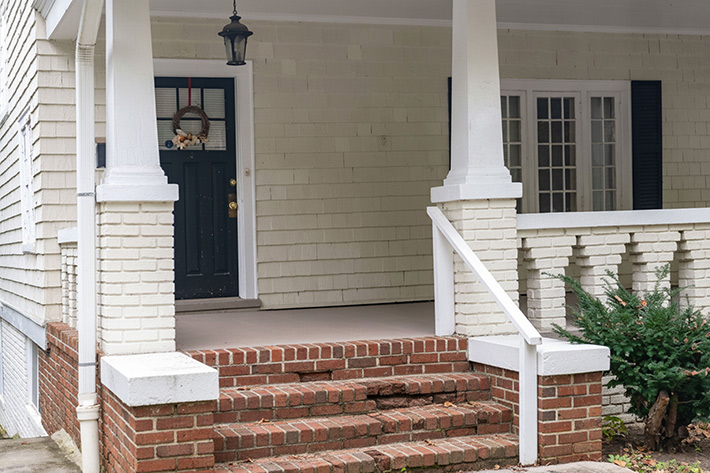
Brick porches take foot traffic every day, hold snow in winter, absorb rain through small cracks, and sit close to the ground where moisture tends to linger.
When one brick loosens, or a mortar joint opens, the problem may look small at first.
A homeowner might notice a wobble underfoot, or a step may sound hollow when tapped. A corner brick may shift just enough to catch the edge of a shoe. The first instinct is often to patch the visible joint and move on.
That may help for a short time if the step is moving, though fresh mortar on the surface may not address what caused the movement in the first place.
Loose Steps Usually Have a Deeper Cause
A brick step should feel solid. When it starts shifting, something has changed below the surface.
Moisture can get into small cracks around the step and expand during freezing weather. That pressure weakens the mortar and can loosen the brick. The damage may begin at one corner, then spread as more water enters.
Movement beneath the steps often occurs if the base settles or the surrounding soil shifts. A step can crack, tilt, or separate from the porch face.
That is why a loose step should not be treated only as a cosmetic repair. The visible brick may be the part you notice, but the reason it moved matters just as much.
Why A Surface Patch Often Fails
Mortar depends on clean, stable material around it. If the surrounding brick is loose, damp, or crumbling, new mortar cannot perform well for long.
A quick patch may fill a gap, but it will not stop movement underneath the step. The joint may crack again after the next freeze. A brick that was loose before the patch may work itself free as people continue using the porch.
This is especially common when old mortar is packed over damaged material instead of being removed properly. The repair looks neat for a season, then the same line opens again.
A good repair starts with determining whether the step is still stable enough to repair in place or whether part of it needs rebuilding.
What A Mason Looks For
A mason will usually look at more than the loose brick itself. The condition of the surrounding joints matters. So does the slope of the step, the way water drains, and the connection between the steps and the porch.
If water is pooling on the tread, the repair may need to address drainage. If several bricks are loose, the damage may go beyond the spot that first caught your attention. If the side of the step is bulging, the structure may need more than repointing.
The goal is to understand whether the problem is limited or whether the step assembly has started to fail. That difference affects the fix plan.
When Rebuilding Is The Better Option
Sometimes a loose brick can be reset, and the surrounding joints can be repaired. Other times, the step has lost enough support that rebuilding part of the section is the better choice.
Rebuilding allows the mason to remove damaged brick and weak mortar. It also gives the mason a chance to correct problems that made the step fail, such as poor slope or trapped moisture.
That kind of repair may sound larger than a simple patch, but it can be the more sensible choice when the same area has already been repaired before. Repeating small patches on a step that keeps moving usually costs more patience than it saves.
Safety Matters Too
Loose brick steps can create a trip hazard for anyone using the entrance. This risk is worse in winter when snow and ice cover small defects. A slightly loose brick can become a real problem once the porch is slippery.
If a step moves when you press on it, rocks under your foot, or has a widening gap around it, inspect it before the damage grows.
A Lasting Brick Step Repair Starts with the Cause
Brick steps should feel steady, drain properly, and hold up through Michigan weather. When they start to loosen, the best repair addresses the reason they moved.
If your brick porch steps are cracked, shifting, or separating from the surrounding masonry, Primo Contracting can inspect the damage, determine whether repair or rebuilding is needed, and restore the steps so your entrance looks better and feels safer underfoot.
Our Rochester Hills masonry and construction services include brick step and porch repair, tuckpointing, chimney repair, brick replacement, retaining walls, foundation and block work, and other residential masonry projects. Contact us today to schedule a Free Estimate and find the right solution for your masonry repairs.