
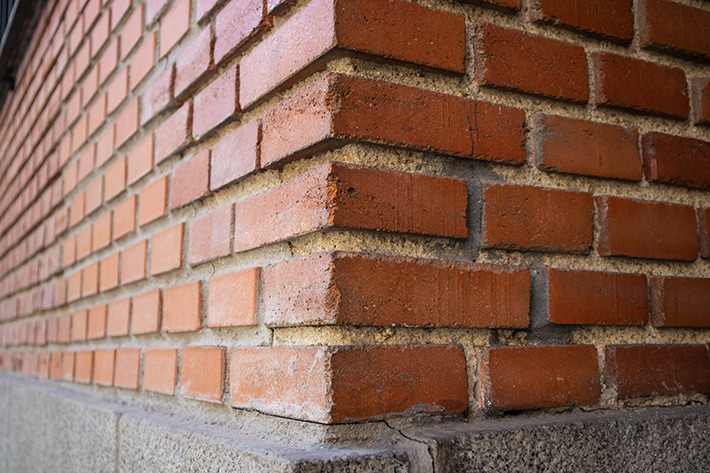
Brick walls look solid and still, but they are always dealing with small movements. Heat, cold, moisture, wind, settling, and changes in nearby materials all place stress on masonry. Most of that movement is minor. The problem begins when the wall has nowhere to relieve itself.
An expansion joint is a planned gap in the masonry.
It is usually filled with a flexible sealant instead of hard mortar. To someone walking past the building, it may look like a simple vertical line. To the wall, it is a pressure release point that helps prevent cracking, bulging, and broken mortar joints.
When expansion joints are missing, placed incorrectly, or sealed with the wrong material, brickwork can begin pushing against itself. Over time, that stress often shows up as stair-step cracks, loose brick, outward movement, or long cracks near corners and openings.
Brick Walls Need Room To Move
Brick expands and contracts as temperatures change. In Michigan, that movement can be especially noticeable because exterior masonry goes through hot summers, freezing winters, and plenty of wet weather in between.
A south-facing brick wall may heat up quickly on a sunny day. A shaded wall may stay colder and damp longer. A wall near a driveway, patio, or roofline may also receive more water exposure. These conditions do not affect every section evenly.
That uneven movement creates stress inside the wall. If the brickwork has proper expansion joints, the wall has a place to absorb some of that movement. If the wall is too rigid, the stress finds another path. Usually, that path is a crack.
Where Expansion Joint Problems Often Show Up
Movement cracks are common around areas where the wall is already interrupted or restrained. Windows, doors, corners, long wall runs, parapets, and changes in building height can all become stress points.
You may notice vertical cracks near the edge of a garage opening. A long brick wall may show a crack that seems too straight to be random. A corner may begin separating slightly from the adjacent wall. On commercial buildings, cracks may appear along long storefront elevations where the brick has very little room to move.
Sometimes the wall does not crack right away. Instead, it begins to bow or bulge. That can happen when pressure builds inside the masonry and the wall starts moving outward rather than splitting cleanly.
Either sign deserves attention. A crack may be a surface repair. A bulge may indicate a more serious structural or anchoring issue.
Mortar Is Not A Substitute For A Movement Joint
One common repair mistake is filling a movement joint with mortar.
It may look clean at first, especially if the goal is for the joint to blend in with the rest of the wall. Unfortunately, hard mortar removes the flexibility the joint was supposed to provide. If this has happened, the mortar should be removed and the joint restored with a flexible material so the wall can move again. The next time the wall expands, the pressure has nowhere to go.
Flexible sealant is used in expansion joints because it can compress and stretch with the wall. It also helps keep water out while allowing the joint to do its job.
That balance matters. An open joint can invite moisture. A rigid joint can trap movement. If the joint is failing, it should be cleaned out, resealed with the appropriate flexible material, and checked to ensure the wall is protected without being locked in place.
Why Older Brickwork May Have Different Needs
Older masonry buildings were not always built with the same movement joint practices used today. Some were designed with thicker walls, different mortar, and building methods that handled movement differently. Others have been altered over time with additions, replacement windows, new doors, patched sections, or repairs made with harder modern materials.
Those changes can affect how the wall moves.
For example, a new opening cut into an old brick wall may change where stress collects. A previous repair using dense mortar may make one section more rigid than the surrounding masonry. A building addition may tie into original brickwork in a way that restricts natural movement.
That is why movement cracks should not be repaired by appearance alone. The cause matters as much as the crack itself, and the repair ought to address the source of the movement before the visible damage is patched.
What A Mason Looks For During An Inspection
A masonry inspection should look beyond the visible crack and clarify what happens next.
A contractor may check whether the wall has existing expansion joints, whether those joints are properly sealed, and whether the sealant has failed. They may also look for loose brick, stair-step cracking, rusting steel, missing flashing, water staining, bulging areas, or signs that previous repairs have trapped moisture or movement. The results help determine the next repair step.
The location of the damage provides clues. A crack near a window may have one cause. A crack in the middle of a long wall may have another. A bulge above a roofline may involve both movement and exposure to water. These clues help narrow what should happen next.
Once the cause is better understood, the repair can be planned correctly. That may mean removing failed sealant, restoring an expansion joint, repairing cracked masonry, replacing damaged brick, or addressing water problems that worsened movement. The inspection should point clearly to the next repair step. The repair ought to match the cause so the wall is not left with the same problem again.
Good Repairs Protect The Whole Wall
The goal of an expansion joint repair is not just to close a gap. It is to help the brick wall keep doing what it was designed to do.
A properly repaired joint should shed water, allow movement, and blend with the surrounding masonry as much as possible. When cracked brick or damaged mortar is nearby, those areas may also need repair. Otherwise, the wall may still have weak points that continue to spread.
For commercial buildings, this can also help reduce maintenance surprises. A long brick wall with failed joints may look acceptable from a distance while slowly developing larger problems. Catching the issue early may prevent more invasive repairs later.
Small Gaps Can Prevent Larger Damage
Expansion joints are easy to overlook because they are not meant to draw attention. When they are working, most people never notice them. When they fail, the damage may appear in a completely different place.
Protect Your Brickwork with Expert Masonry Repairs
If your brick wall has straight vertical cracks, widening gaps, bulging sections, or old joints filled with solid mortar, have the wall evaluated. Primo Contracting in Rochester Hills can inspect brick masonry movement issues, repair damaged joints, and recommend the right masonry repair approach to help protect your home or commercial building from avoidable cracking and long-term wall damage.