
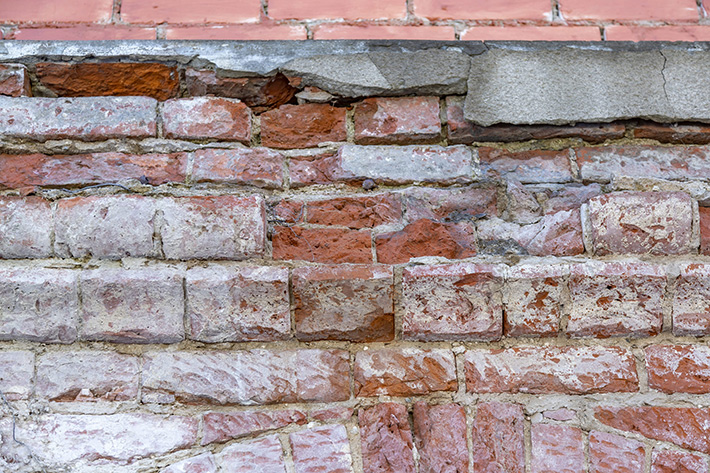
Brick looks tough, so it’s easy to assume it stays tough forever. Then you notice the face of a few bricks starting to flake. Maybe it’s under a window, maybe it’s along the bottom course near a walkway, maybe it’s on one corner that seems to catch the worst weather. The surface starts breaking away in thin layers, and once you see it, you can’t unsee it.
That kind of damage is called spalling, and in Michigan, it’s one of the most common brick problems homeowners run into.
It isn’t just cosmetic. Spalling is usually a moisture story, and the sooner you figure out why the brick is staying wet, the easier the repair tends to be.
Brick Spalling And How To Stop It From Spreading
Spalling is when the face of a brick chips, flakes, or crumbles off. It often starts small, like a rough patch that looks dusty. Over time, you can lose the brick’s crisp edge, and the surface becomes pitted or broken.
In a freeze-thaw climate, the mechanism is simple: water enters the brick, freezes, and expands. That expansion creates pressure inside the brick. If the brick can’t dry out between wet cycles, it takes that freeze pressure again and again until the surface fails.
The important detail is drying. Brick can handle getting wet. It struggles when it stays wet.
Underlying Causes of Wet Brickwork
Most spalling isn’t random. It shows up in the places where water collects or keeps returning.
● Ground contact and landscaping – If soil or mulch is piled up against the brick, the bottom course stays damp. You’ll often see spalling low on the wall, especially where flower beds are built up over the years.
● Splashback and poor drainage – Downspouts that dump water too close to the foundation, missing extensions, or overflowing gutters can keep one area soaked. The spalling often matches the splash pattern.
● Bad mortar or failed joints – Mortar joints that are cracked or deteriorated let more water into the wall. Once water has a path in, freeze-thaw does the rest.
● Hard, non-breathable coatings – Paint and some sealers can trap moisture. If moisture enters from behind the wall or through joints, a coating can slow drying and push the brick toward failure.
● Incorrect repairs – This one surprises homeowners. If the brick was repaired with mortar that is too hard for the brick, the wall may shed water differently. In older masonry, especially, the “wrong” mortar can push the brick to take more stress than it was meant to handle.
Not Every Rough Brick Is Due To Spalling
Not every rough brick is spalling, and it helps to know what you’re looking at.
Spalling usually looks like:
● Thin layers peeling from the brick face
● Chipping at edges and corners
● A rough, broken texture that used to be smooth
● Concentration in damp zones: near grade, under windows, near downspouts
Efflorescence, by contrast, is white powdery staining. That’s salt being carried to the surface by moisture. Efflorescence alone isn’t always a crisis, but when it shows up alongside spalling,
it’s a strong clue that moisture is moving through that section of wall more than it should.
What A Proper Repair Usually Includes
A lasting fix typically involves correcting moisture conditions and rebuilding damaged masonry.
● Moisture management first – This can mean extending downspouts, repairing gutters, correcting grade, or adjusting landscaping so the brick base isn’t buried. Sometimes it means addressing flashing above windows and doors if water is entering higher up.
● Repointing where needed – If mortar joints are cracked or powdery, repointing can reduce water entry. The goal is not “more mortar.” It’s the right mortar, installed correctly, so the joints shed water while still allowing the wall to breathe.
● Brick replacement in affected zones – Severely spalled bricks should be replaced. Once the face is gone, the brick becomes weaker and absorbs water more easily, accelerating future damage.
● Matching materials and appearance – Good masonry repair should match brick size, color, and texture as closely as possible. This isn’t vanity. A mismatch often leads to different absorption behavior, which can cause uneven weathering over time.
Prevention That Actually Helps
A few practical habits can slow or prevent spalling in the future:
● Keep soil and mulch below the brick line so the wall base can dry.
● Make sure downspouts discharge away from the foundation.
● Fix leaking gutters quickly, especially at corners.
● Avoid painting brick unless it’s part of a planned masonry system.
● Address small mortar cracks before they become open pathways.
Spalling is one of those problems where early action usually stays simple. Once large areas are affected, the scope and cost go up.
Get Spalling Brick Repaired Before the Damage Spreads
If you’re seeing spalling on more than a few bricks, or if the damage is clustered in an area that stays damp, it’s worth having the wall evaluated. The goal is to stop the moisture cycle, not just patch the visible damage.
Identify why your brick is spalling and get the right repair plan from Primo Contracting in Rochester Hills. For more than 20 years, our masonry and construction company has provided expert masonry repair, restoration, and construction services. Our craftsmanship is built on experience, skill, and attention to detail, helping business and homeowners restore brick structures that are strong, lasting, and beautiful.
Contact Primo Contracting today to schedule a Free Estimate.