
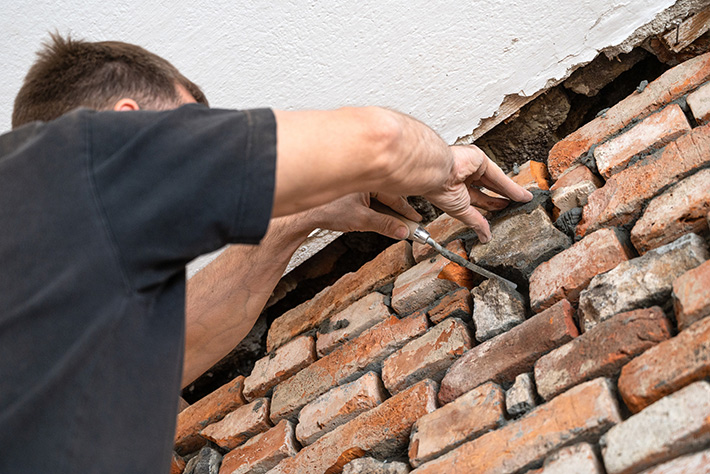
On some houses, the first clue is a dark strip of brick that never seems to dry. It shows up down low, where the lawn meets the wall, or behind a row of shrubs that get watered every day in July. Sometimes you notice it because the mulch line keeps creeping upward, and the brick at the bottom looks permanently stained.
Sometimes you notice it because the mortar looks “salty” in one spot, or because the brick surface starts shedding thin flakes onto the sidewalk.
Brick walls can typically take on water without concern. – brick and mortar are both porous, after all.
The difference between “normal” and “problem” is whether the wall can get rid of that water once it’s in there.
Brick veneer is a system, not a single material
Most brick homes have brick veneer, not a solid brick wall. The brick is the outer layer. Behind it is typically a narrow gap, then the backing wall. That gap is there for a reason. It gives moisture a way to run down and a way to dry out.
When wind-driven rain hits the wall, some water is absorbed into the brick, while some seeps through tiny cracks in the mortar. It does not need a crack, you can see. Over time, it works in. Once it reaches the back side of the brick, gravity takes over and moves it downward. Flashing near the base is meant to catch that water and direct it outward.
The water needs a place to go. That’s where weep holes come in.
Weep holes are small openings near the bottom of the brick veneer. Sometimes they look like little gaps in the mortar joint. Sometimes they’re vents. You don’t need to know the design to understand the function. They’re the outlet.
What Goes Wrong When The Outlet Is Missing or Buried
If the bottom of the veneer can’t drain, moisture collects where the wall is least forgiving. That area is already prone to staying wet. It’s close to the soil. It’s close to splashback. It’s close to landscaping. Add trapped water behind the brick, and you have a wall that stays damp long after the rest of the exterior looks dry.
The base of the wall is also where debris tends to gather inside the cavity. Mortar droppings from construction can sit at the bottom and create a small dam. Dirt can work its way in over the years. You do not need inches of buildup. A little blockage in the wrong place is enough to keep water from moving out the way it should.
From there, moisture passes through the brick area into the wood and sheathing. These materials cannot withstand prolonged exposure to moisture.
Trim might look normal until you press it, and it feels a bit soft at the edge. Paint on an interior may show blistering that “mysteriously” reappears after a big storm. Basements often reveal dampness in the form of smells that are worse after the rain and better after a dry week.
Mold follows moisture, but it doesn’t need a flood to get started. If the cavity stays damp, it’s enough.
Why Spalling Often Appears During The Winter Months
Spalling is when brick begins to break away. Instead of a clean, hard surface, you get a rough patch, chips, or flakes. It’s common to see it closer to grade, or clustered, where the wall stays wet.
Freeze-thaw cycles are hard on masonry. Water gets into the brick and mortar. When temperatures drop, that water expands as it freezes. If the brick has been drying between storms, it’s more likely to survive. If it’s been staying wet, the brick repeatedly takes that freeze pressure, and the surface starts to fail.
You may also see a white, powdery film. That’s often mineral salts brought to the surface as moisture moves through the masonry. It can be light and harmless. It can also be a recurring signal that water is traveling through one area more than it should. If you brush it off and it keeps coming back in the same place, something is feeding it.
How Weep Holes Vanish
Missing weep holes can mean they were never included. It happens.
More often, the weeps are there, but they’ve been unintentionally smothered. Landscaping is the usual culprit. A bed gets topped off each spring. Soil gets added to level out an area. Mulch gets piled high because it looks neat. After a few seasons, the bottom course of brick is sitting behind a berm of dirt and mulch. The weep line ends up below grade, and the wall can’t drain into the soil.
Then there’s the blocked-weeps problem. Mortar can clog openings. Paint can seal them shut. Dirt and webs can fill the gap. The holes are small by design, so it doesn’t take much to turn “drainage” into “no drainage.”
Rochester Hills Masonry Contractor for Brick Damage Prevention
The best place to start is verifying your basics.
If you want an experienced masonry contractor to assess your weep holes, drainage details, mortar condition, and areas where water is trapped, Primo Contracting in Rochester Hills can perform an on-site evaluation and recommend the right repairs. We specialize in masonry and construction services, including block wall repair, foundation work, custom home masonry, tuckpointing, and more.
Contact us today to schedule your assessment and protect your brickwork before damage worsens.